Ralli quilts are distinguished by their solid, strong colors. Historically, fabrics were hand-dyed at home using plant-based dyes. By the early 1900s, chemical dyes had become available in local markets, though many people continued to rely on natural dyes such as indigo for blue and madder root for red. Today, quiltmakers may dye their own fabric or purchase cloth from the village dyer. Although solid-colored fabrics are generally preferred, makers occasionally include a commercial print or use an ajrak block print on the quilt back.
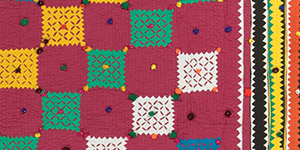
Traditional color preferences vary from region to region, and the origin of a quilt can often be identified by its palette. Quiltmakers in southern Sindh and the Thar Desert use what is known as the satrangi color palette: strong red, white, black, orange or yellow, dark green, dark blue, and purple. Farther north, makers in central Sindh use a broader range of colors, such as pink, light green, and turquoise, resulting in quilts that avoid a single dominant palette. Quiltmakers in Northern Sindh use many colors and specialize in complementary combinations like red and green, or analogous pairings like orange and burgundy.
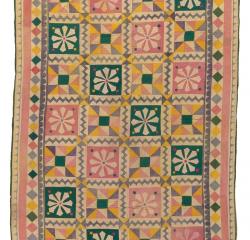
In the Rahim Yar Khan area of Punjab Province, palettes tend to feel much lighter, with prominent use of white alongside bright rose, blue, and yellow. East of Sindh, in Cholistan, makers draw from earthy hues that reflect the desert environment—brown, orange, mustard yellow, and olive green. In India, quilters use a wide spectrum of colors, with a preference for bold primary hues and a variety of brightly printed fabrics.