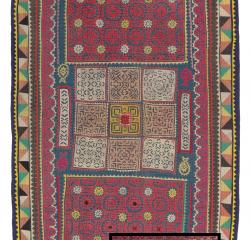
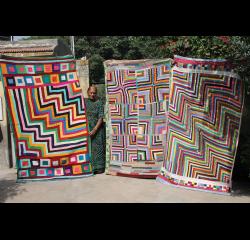
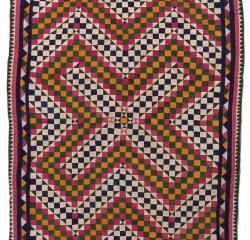
Ralli quilts display an extraordinary range of designs. Most follow a basic structure: a large center field that contains the primary pattern, surrounded by a series of patchwork or appliqué borders. One of the most common decorative themes is flowers. The center field is called baro, or "field of flowers," while individual pieced blocks or appliquéd designs are known as phul, or "flower." The border is called putti. Unfortunately, most specific pattern names have been lost over time. Border patterns, however, have retained more names, including mandherro (a cross-shaped motif inspired by a milk churn), pakharo ("camel cart"), also known as kajuri ("date palm"), kungra kor (a triangular pattern similar to what American quiltmakers call Flying Geese), and kungri (small linked triangles). Designs and color choices vary by region, and some patterns may have been passed down for thousands of years.
By rough estimate, more than 20 million people sleep under rallis every night. Ideally, each person has at least two quilts—one laid across the ropes or straps of the wooden frame bed (charpoy) as a mattress, and one or more quilts on top. No two rallis are exactly alike. Their differences reflect available fabrics, the chosen pattern, embellishments, and the maker's individual creative touches.
Because the houses are small and the weather is often hot, many people sleep outside in warm months on their charpoys, in open courtyards surrounded by brick walls. As one woman explained when asked how she designed her quilts: “I think about how they will look under the stars.”