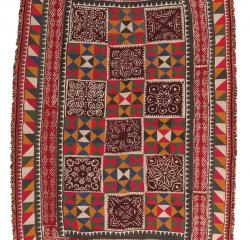
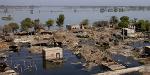
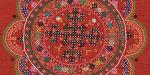
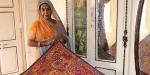
The Sindh province is named after the Indus River and has a long and colorful history stretching back thousands of years. It is the heart of the ralli region and remains largely agricultural, aside from Karachi, Pakistan’s largest city, and a few other urban centers. Sindh is often described as having three distinct areas. Lower Sindh lies in the lowlands along the Arabian Sea and includes part of the Thar Desert. It contains many small villages as well as the ancient capital of Thatta and the sprawling port city of Karachi. The region has long been known for cotton production, textile trading, and a wide range of embroidery traditions. Middle Sindh is irrigated farmland with fishing along the Indus River. Upper Sindh combines farming zones with desert areas. Each region is home to different communities and tribes, and each has preferred symbols and color palettes that appear in their quilts.
Ralli makers in Lower Sindh use a strong seven-color palette and often create intricate geometric patterns using fabric pieces smaller than 1.5 inches square. Their quilts frequently feature detailed mandherro borders—a motif based on a milk churn's head—as well as other traditional borders. They commonly use an appliquéd sashing that is red over a white background.
Makers in Middle Sindh favor a brighter palette that includes pink and turquoise. Their quilts typically feature sashing made of white appliqué fabric applied over a darker background.
Northern Sindh is known for quilts made of similar blocks of fine-lined appliqué set on the diagonal. Alternating blocks may be embroidered. Borders are often elaborate and use a stepped-square pattern similar to motifs found in oriental rugs. Because these regional design traditions are distinctive, it is often possible to identify the area where a quilt was made.
Other ralli-making areas, such as Cholistan and Rahim Yar Khan in the Punjab Province, also have specific traditional designs. Nomadic groups make rallis as well. Among the best-known are the Saamis, who hold community celebrations and marriages in Badin, Pakistan, and spend the rest of the year traveling with their animals through India and into Iran. They are famous for their embroidered quilts. Another important group are the Jogi, or snake charmers, who make quilts distinguished by warm reddish-brown fabrics paired with striking yellows and hot pinks. Their quilts may also feature kanberi embroidery—a stitch said to mimic a snake's movement across sand—and wool tassels or pompons at the corners and edges.