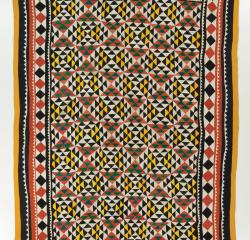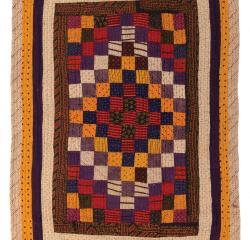
Patchwork rallis range from very simple designs to extremely complex, multidimensional patterns. The simplest type features a plain center field—usually a single fabric, occasionally a colorful printed piece—surrounded by a simple border of stripes or stripes paired with a patterned band. These quilts are called lassi or "simple quilts." Their quilting lines are very close together, about ¼ to ½ inch apart, and makers sometimes use different colors of thread to add patterning to the surface. These are considered everyday quilts.
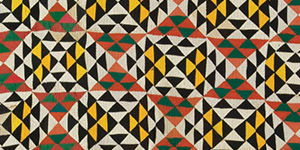
More complex are the patchwork patterns. Today, few specific names for these patterns survive—if they ever existed—yet the geometric patterns are highly distinctive. Patchwork quilts may include 12 blocks (a 4 x 3 grid), 30 blocks (6 x 5), or even 80 blocks (10 x 8), depending on the design, with or without sashing. Women use repeating geometric forms such as squares or triangles, some as small as one inch. Others create sophisticated compositions that combine multiple geometric shapes into intricate patterns.
The background of the women who make these quilts underscores the extraordinary nature of the work. Most did not attend school; some never learned to hold a pencil. Without written records of patterns, row arrangements, or layouts, they rely entirely on memory to create quilts of remarkable precision and consistency. This ability continues to astonish modern quilters around the world.