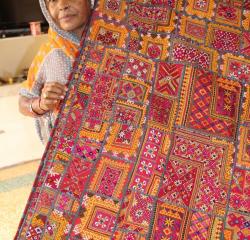
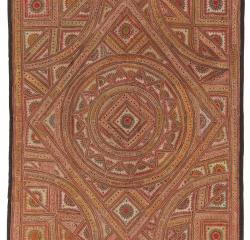
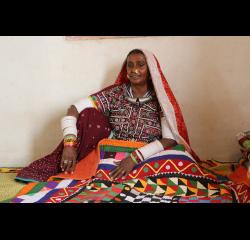
Many of the creative opportunities available to women in other parts of the world, such as painting, writing, or home decorating, are not readily available to women in the ralli region. Their primary avenue for artistic expression is the creation of amazing textiles. These include their embroidered clothing as well as dowry items such as special garments, rallis, storage bags, pillows, and food covers. Girls traditionally begin sewing around age twelve to become proficient and to complete their dowries in time for marriage.
Ralli quilts often reveal the maker's imagination and care. Women with few resources may piece scraps together for the quilt back, then dye it green, blue, or red to harmonize with the front. If the quilt is intended to be very special, the quilter may save diligently to buy a whole cloth—usually green—for the back.
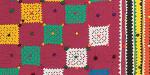
No two quilts are exactly alike, even when made by the same woman. Quilters draw from a wide range of designs and can alter borders or shift color placement to make each quilt a little different. A remarkable characteristic among many ralli makers is their ability to memorize patterns. They reproduce designs they have seen in the village or while helping another quilter, and some cite inspiration from tile floor patterns. Many designs exist in collective community memory—the oldest are referred to simply as “old” patterns, while more recent ones are called “new” designs.
In some communities, women are expected to marry only their first cousins. If there are no male first cousins, a woman may face a life without marriage. One account describes a woman in this situation who devoted herself to household work, cared for nieces and nephews, and left behind a legacy of beautiful quilts.