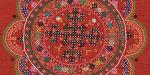
Rallis have traditionally been made of cotton fabric. Southern Pakistan and parts of neighboring India have been known for thousands of years for producing high-quality cotton and even supplied the Roman Empire. Today, cotton is more expensive than synthetic fabric, and some quiltmakers now choose synthetics because they are cheaper, colorfast, and easy to sew. When cotton is used, makers may dye it themselves or purchase material from the village dyer.
Most rallis are sized to cover one person during sleep. They consist of a back, a filling, and a top—each part offering details into the quiltmaker's life. The back is often constructed from one of the maker’s discarded head shawls, which is typically large enough once an additional six inches of fabric are added along the side and top. Green is the preferred color for most quilt backs, so the backing is commonly dyed green, although in Rahim Yar Khan, Pakistan, orange is favored. If the quilt is intended as a gift, the backing may be a specially purchased piece of solid green fabric.
The filling is created from layers of tiny fabric scraps too small or fragile to use for the top. The number of layers varies depending on the desired warmth; in rare cases, flattened cotton bolls are used instead. The top is usually pieced or appliquéd, reflecting both local traditions and the quilter's creativity. Traditionally, only solid-colored fabrics are used.
Although some women perform the quilting on their own, the ideal method involves several female relatives or friends quilting together, an event known as the "laying of the ralli" or rallee-vijhanu. They sit on opposite sides of the quilt, pull the layers taut, and begin stitching from each edge. The lines of stitching may be spaced from 1/8 to 1 inch apart, often sewn with different colors of thread to create additional patterning. Edges may be turned under or overstitched. Women sometimes add embellishments such as tassels at the corners or sequins or mirrors on the surface.